


The Wilderness in Germany Initiative celebrates its 10-year-anniversary: 10 years of working towards a more comprehensive approach to wilderness. 10 years of working towards more wilderness in Germany.

A place for wilderness in Germany
There is great demand for more wilderness. Many animals, plants, and fungi depend on having large contiguous habitats where natural processes can take place undisturbed. Humans, too, feel a need to experience nature in its wild form – in places that are within easy reach. Germany offers a wide range of fascinating landscapes – from its coasts in the north to the Alps in the south. However, the country is densely populated and criss-crossed by roads. This makes it all the more pressing to preserve the last remaining intact natural landscapes for future generations.
And it is why we are supporting the creation of new wilderness areas on former military training grounds in Brandenburg and Thuringia. We are advising our partners there and providing funding for the local wilderness projects by supporting land purchases, for example. In the Wispertaunus region in Hesse, we are safeguarding natural forests close to Frankfurt am Main by linking up existing protected areas within the forest.
We have launched the Wildnis in Deutschland (“Wilderness in Germany”) initiative which gives us considerable leverage with regard to political decision-making. The alliance of 22 conservation organizations also pools its information and experience in managing wilderness areas. We coordinate activities and provide advice, especially to smaller initiatives that are campaigning for wilderness areas in their local region.
Our work in Germany
- We establish and extend protected areas
- We advise and support wilderness initiatives
- We influence decision-makers
- We finance and mediate the purchase of wilderness areas
- We train young nature conservation professionals
- We support wilderness research
News from Germany

The Frankfurt Spring School Alumni Program is Here!
08/05/2026NewsThe Frankfurt Spring School Alumni Program is Here!
We are excited to announce the launch of the Frankfurt Spring School Alumni Program, creating new opportunities for graduates of the Frankfurt Spring School on Conservation Project Management to stay connected, continue learning, and support one another long after the four-week course has ended.
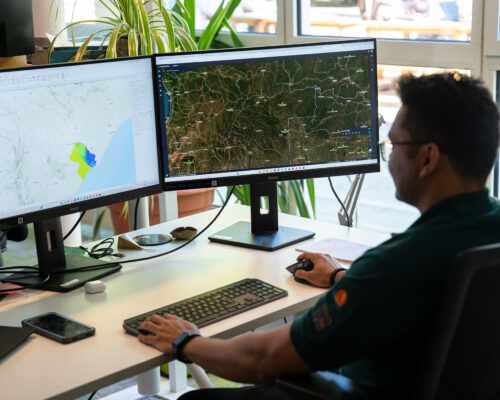
The Conservation Generation – New Paths for the Wild: Shanyal Uqaili on Satellites, Software and Protected Areas
07/29/2026NewsThe Conservation Generation – New Paths for the Wild: Shanyal Uqaili on Satellites, Software and Protected Areas
Young employees at FZS are shaping the future of nature conservation with their scientific expertise, modern technologies, and fresh perspectives. In the third and final part of our series, Shanyal Uqaili explains how satellite imagery, artificial intelligence, and geodata help us better understand landscapes and plan targeted conservation measures.

Barbara and Christoph Promberger Awarded the Federal Cross of Merit
12/02/2025NewsBarbara and Christoph Promberger Awarded the Federal Cross of Merit
We congratulate Barbara and Christoph Promberger on being awarded the Federal Cross of Merit – a recognition of their decades-long commitment to protecting Romania’s forests and biodiversity.
Our projects in Germany
-
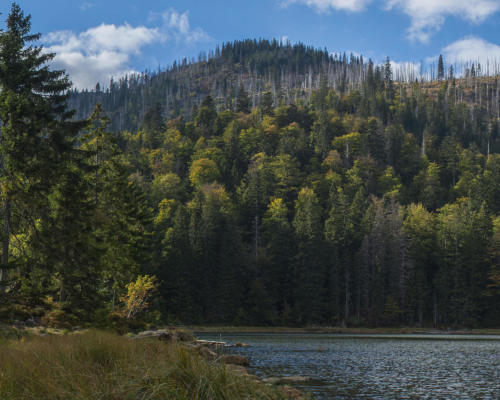
Wilderness in Germany
Broad alliance for more wilderness in Germany
There is great demand for more wilderness. Many animals, plants, and fungi depend on having large contiguous habitats where natural processes can take place…
Germany -

Frankfurt Spring School
There is great demand for more wilderness. Many animals, plants, and fungi depend on having large contiguous habitats where natural processes can take place…
Germany -
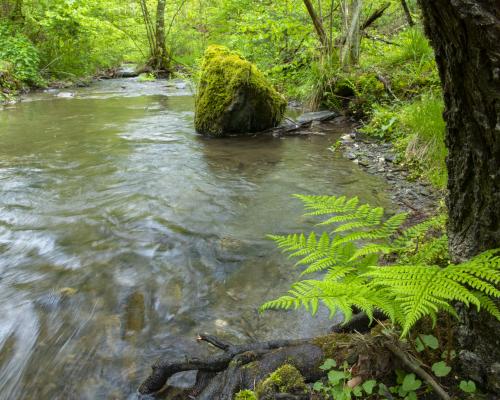
Wispertaunus
Development of a natural forest network
There is great demand for more wilderness. Many animals, plants, and fungi depend on having large contiguous habitats where natural processes can take place…
Germany
Milestones

2025

2024
The federal government remains committed to the 2% wilderness target: This goal is included in the National Biodiversity Strategy 2030, which was adopted in December 2024.
2024
First nationwide wilderness assessment: Currently, large-scale wilderness areas cover 0.62 percent of the country’s area. The study shows that there is potential for wilderness areas to cover 1.67 percent of the total area. This brings the 2-percent wilderness target within reach. The study was conducted by Naturstiftung David, Heinz Sielmann Foundation, and FZS.

2023
Start of the Wispertaunus project near Frankfurt

2023
The Königsbrücker Heide has received international recognition as an IUCN Category Ib wilderness area, making it the first German wilderness area to receive this designation.

2023
Opening of the KlimaWildnisZentrale (Climate Wilderness Center): It serves as Germany’s central advisory body on wilderness in the context of natural climate protection and is headquartered at the German Wilderness Office.

2023
Inauguration of the German Wilderness Office in Berlin: Supported by Naturstiftung David, FZS, and the NABU-Foundation for National Natural Heritage, the German Wilderness Office will be a permanent point of contact. Among other things, it serves as the headquarters for the coordination team of the Wilderness Initiative in Germany and the KlimaWildnisZentrale.

2022
Bavaria has designated additional areas as natural forests: There are now a total of 83,000 hectares protected as natural forests in Bavaria.

2021
The Wilderness Area Westlicher Vogelsberg – Laubacher Wald is inaugurated: A forest spanning approximately 225 hectares that, together with existing areas, forms the Western Vogelsberg Wilderness Area.


2020
Kellerwald-Edersee National Park expanded by approximately 2,000 hectares.

2020
Bavarian Forest National Park grows by 600 hectares.


2017
Wilderness in Germany initiative publishes “Wegweiser zu mehr Wildnis” (“Guide to More Wilderness”).


2016
Hesse designates large areas of natural forest e.g. in Wispertaunus.


2015
Foundation of Hunsrück National Park.

2014
FZS Wilderness in Germany project starts work.

2009
Start of the large-scale Hohe Schrecke nature conservation project.

2000
Establishment of the Brandenburg Wilderness Foundation.