The findings suggest that the global 30×30 target may be closer than we thought. But the study also shows that what matters is not just how much land is protected, but where it is protected and how.
By 2030, at least 30 percent of the world’s land and marine areas are to be effectively conserved and protected. This is the target agreed upon by the international community at the UN Biodiversity Conference (COP15) in Montreal in December 2022. According to existing statistics, 18.5 percent of the world’s land area is currently covered by protected areas.
Nature Study: 26.8 Percent of the World's Land Could Contribute to Conservation
The agreement also recognizes that, in addition to traditional protected areas, other areas can contribute to the 30×30 target if they help conserve biodiversity in other ways – for example, through the efforts of Indigenous communities, conservation organizations, or private individuals. However, many of these areas have yet to be included in international databases. The new study seeks to account for their potential contribution, resulting in a global estimate of 26.8 percent.
The study comes shortly before the UN Biodiversity Conference (COP17) in Yerevan, where progress toward the global biodiversity targets will be a key topic. While the new figures are encouraging, they do not mean that the 30×30 target has already been achieved. Many ecologically important habitats remain inadequately protected. What’s more, the effectiveness and long-term sustainability of conservation efforts are just as important.
FZS staff member and study co-author Steffen Zuther explains what the findings mean for conservation and how conservation work in Kazakhstan contributed to the study.
Interview: Study Co-Author Steffen Zuther on the 30×30 Target
Steffen, first of all, congratulations on your publication in Nature!
Steffen Zuther: Thank you! I’m really pleased that we were able to contribute our experience and data from Kazakhstan to this international study. The research was led by the Durrell Institute of Conservation and Ecology at the University of Kent in the UK.
Your study on the 30×30 target comes just in time for the next UN Biodiversity Conference. Until now, 18.5 percent of the world’s land area was considered protected, but your study puts the figure at nearly 27 percent. Does that mean we suddenly have more protected areas?
No, unfortunately not! No new protected areas have been created. Instead, we’ve expanded the data used to assess conservation coverage. Many areas that already contribute to conservation simply haven’t been included in international statistics so far. In Kazakhstan, for example, there are hunting areas where rangers patrol to protect wildlife. Our partner organization ACBK has been managing one such area for years, essentially as a privately managed, hunting-free conservation area. Areas like these weren’t included in the official statistics at the time the data was collected.

Why aren’t these areas included in international statistics?
There are several reasons. Some protected areas are officially recognized in their respective countries but haven’t been recorded in international databases. Other areas aren’t traditional protected areas at all, yet they still contribute to the long-term conservation of biodiversity. These might include areas managed by local communities or Indigenous peoples, for example. Or land managed by conservation organizations or private individuals, such as the hunting areas in Kazakhstan I mentioned earlier.
And how did you identify these gaps?
For the study, data from 25 countries or regions, together covering around ten percent of the world’s land area, was analyzed. Local expertise was also incorporated to identify exactly which areas are protected and which other areas contribute to conservation. I was the point of contact for Kazakhstan. Based on these findings, the researchers then developed a global estimate, arriving at 26.8 percent.
Conservation is about more than coloring areas green on a map. Protected areas need to be well managed, connected to one another, and protected in partnership with local communities. Only then can they truly safeguard nature.
So, with the 30 percent target almost within reach, can we start popping the champagne?
A little optimism is certainly justified! But we shouldn’t let the numbers give us a false sense of security. The sheer amount of land covered tells us nothing about how well biodiversity is actually being protected. What matters is that particularly valuable habitats are preserved, conservation efforts work on the ground, and protected areas are meaningfully connected.
We see this in Kazakhstan, too: Saiga antelopes migrate over vast distances. That’s why it’s important not only to protect individual areas but also to maintain and expand the connections between them.
-
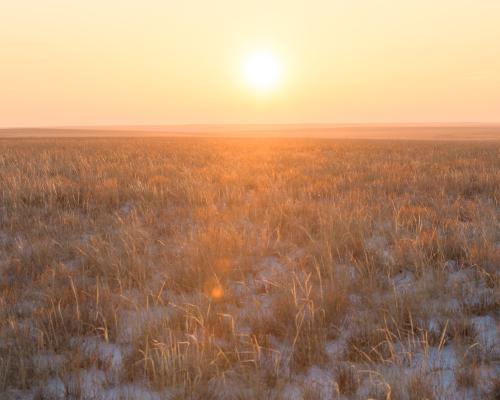
Altyn Dala – Protecting the golden steppe
A new study published in Nature estimates that 26.8% of the world’s land could contribute to conservation. FZS expert Steffen Zuther explains the opportunities and limitations of the 30×30 target.
Kazakhstan

You’ve been working to protect entire landscapes in Kazakhstan for many years. What does that look like in practice?
Together with our Kazakh partners, we’ve helped establish five new protected areas and create a wildlife corridor covering around two million hectares for saiga antelopes. We also support ranger training, wildlife population monitoring, and collaboration with local communities. Because conservation can only succeed in the long term if areas are well managed and local people are involved.
So what’s your most important message?
The 30 percent target doesn’t seem quite as unrealistic as we once thought. But it’s not just about coloring as many square kilometers green on a map as possible. There’s still a great deal to be done to improve protected area management, involve local communities, protect ecosystems that have been overlooked so far, and connect protected areas. Only then will we have made a real difference for nature conservation.
Steffen Zuther is a scientist at the Frankfurt Zoological Society (FZS) and project manager of the Altyn Dala Conservation Initiative in Kazakhstan. He is a co-author of the study published in the scientific journal Nature, to which he contributed data from protected areas in Kazakhstan.
Link to the study: https://www.nature.com/articles/s41586-026-11157-4