Skip to main content Donate

FZS in the United States of America

Frankfurt Zoological Society – U.S. is a non-profit 501c3 organization founded in 2007 by American friends and supporters of the Frankfurt Zoological Society. The organization partners with FZS to conserve nature in large, high-biodiversity landscapes around the world, together with national wildlife authorities and local communities.

Mission

The mission of Frankfurt Zoological Society – U.S. is to conserve wildlife and ecosystems focusing on protected areas and outstanding wild places.

Frankfurt Zoological Society – U.S. main purpose is the conservation of wilderness and biodiversity worldwide. Frankfurt Zoological Society – U.S. also seeks to enhance the general public’s understanding of the importance of wildlife conservation and the appreciation of nature’s diversity on our planet.

Vision

Frankfurt Zoological Society – U.S. envisions a world where wildlife and wild places are cherished and conserved in recognition of both their intrinsic worth and economic importance for present and future generations.

Frankfurt Zoological Society – U.S. focuses on the most significant ecosystems on our planet, and works topreserve wildnerness and biological diversity on earth not only for human beings, but also as an end in themselves. We recognize that humans are both the source of environmental problems and the key to their solution.

Supported Projects

Nyerere National Park and Selous Game Reserve

The Selous Game Reserve in southeastern Tanzania is one of Africa’s largest protected areas and internationally recognized as a UNESCO World Heritage Site.

Tanzania

Mahale National Park

At the western tip of Tanzania, on the shore of Lake Tanganyika, lies a mountainous region boasting chimpanzees and rich biodiversity.

Tanzania

Lomami National Park

Protection of the Lomami ecosystem flora and fauna

Protection of the flora and fauna of the Lomami ecosystem and establishment of a functioning national park administration together with local partners.

Democratic Republic of the Congo

Cantão ecosystem

Protection and management of rich variety of terrestrial and aquatic wildlife in the Cantão Ecosystem

Brazil

Manu Landscape

Conservation of the extraordinary biological, cultural and environmental diversity of the Manú landscape

Peru

Yaguas-Putumayo

Conservation of the biodiverse ecosystems of the Yaguas National Park and the transboundary Lower Putumayo River Ecosystem

Peru

Bahuaja Sonene and Tambopata

From the high altitudes of the Andes to the Amazon

Support the management of the protected areas of the Bahuaja Sonene Tambopata landscape

Peru

Purús Landscape

Protecting Peru’s largest national park

Maintaining the conservation status of the protected areas and indigenous lands in the Purus landscape with an integrated, ecosystem approach through participatory management.

Peru

Bale Mountains National Park

One Park, Many Worlds

From the mountains to the cloud forests: Protecting endemic species in Bale Mountains National Park and empowering the people of the region.

Ethiopia

Bukit Tiga Puluh

A home for orangutans, elephants and tiger

Bukit Tiga Puluh translates in local language to “30 hills”. This landscape is located in the center of the Indonesian island of Sumatra, a global biodiversity hotspot in the Sunda Islands (Sunda Archipelago), where particularly high species richness is found.

Indonesia

Ukrainian Carpathians

Wild Forest Conservation and Emergency Support for protected areas

Wild Forest Conservation and Emergency Support for protected areas.

Ukraine

Kon Ka Kinh and Kon Chu Rang

A habitat for rare primates and other wildlife

Forest protection in the Central Highlands of Vietnam.

Vietnam

Gonarezhou National Park

A Place for Elephants

Home to an estimated 11,000 elephants, the Gonarezhou National Park truly deserves its vernacular name as ‘Place of Elephants’.

Zimbabwe

Kanuku Mountains

The Kanuku Mountains region represents a unique area, most of which is largely unexplored.

Guyana

North Luangwa National Park

The North Luangwa National Park in Zambia is home to many animals, especially Zambia’s only black rhino population and an increasing elephant population.

Zambia

Nsumbu National Park

A landscape defined by water

Covering an area of 10,000km2, the Nsumbu-Mweru ecosystem is the heart of an exceptional ecosystem located between the great African lakes of Tanganyika in the east and Mweru in the west.

Zambia

Wild Polissia

Conservation of Europe’s largest natural river landscape and emergency support for protected areas

Polissia is Europe’s largest remaining inland wetland wilderness. Some of the continent’s last ‘wild’ rivers meander across the landscape, through a vast patchwork of extensive carbon-storing peatlands and forests, islands, lakes, bogs and wet meadows.

Ukraine

Białowieża Forest

One of the last and largest lowland, mixed-broadleaf, virgin forests in Europe

The expansive Białowieża Forest is one of the last and largest lowland, mixed-broadleaf, virgin forests in Europe.

Poland

Serranía de Chiribiquete

Incredible biodiversity in a remote rainforest

Serranía de Chiribiquete is located in the heart of the Colombian Amazon and is one of the few places where the fauna of the Guiana Shield, Orinoco savannas, and Amazon rainforest converge.

Colombia

Altyn Dala

From the mountains to the cloud forests: Protecting the rich biodiversity of Bale Mountains National Park and empowering the people of the region.

Kazakhstan

Serengeti National Park

People, Wildlife & Conservation

Discover how long-term conservation, protected areas, and community partnerships help keep the Serengeti ecosystem connected for people and wildlife.

Tanzania

Serengeti Ecosystem

Community Conservation Work in the Serengeti Ecosystem

The Serengeti ecosystem is a mosaic of protected areas and community land. Wildlife traverses each of these areas throughout the year. Protecting wilderness and promoting sustainable development of the local communities go hand in hand.

Tanzania

Jüterbog, Lieberoser Heide, Heidehof and Tangersdorf

Brandenburg Wilderness Foundation Wilderness areas

The tanks have left their marks. But nature is reclaiming its territory, and the Brandenburg Wilderness Foundation is letting it.

Germany

Wolf Mountains

One of Europe’s last remaining wilderness areas

One of Europe’s last remaining wilderness areas is located in the heart of the Carpathian Mountains. Bordering Poland, Slovakia, and Ukraine, the “Wolf Mountains” stretch across a wide area, which for many years was abandoned due to its location along country borders.

SlovakiaPoland

Wilderness in Germany

Broad alliance for more wilderness in Germany

The initiative Wilderness in Germany is working to create more wilderness by conducting area projects and public relations work, and by providing policy advice.

Germany
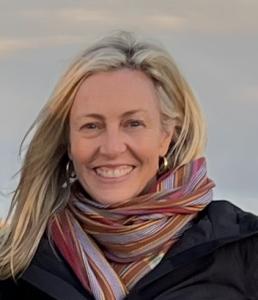
The FZS-US Team

Executive Director - Dr. Peyton West

Dr. Peyton West is the Executive Director of FZS-US and serves as Secretary and Treasurer of the Board. She is also the co-chair of the FZS Global Steering Committee. Previously, she was the Senior Project Director at the American Association for the Advancement of Science (AAAS)’s Center of Science, Policy and Society Programs, and a curatorial fellow in the Mammal Department at the Wildlife Conservation Society’s Bronx Zoo. She has also consulted for the Bell Museum of Natural History and the television show “Go Diego Go.” She obtained her BA from Yale and her Ph.D. with the Serengeti Lion Project at the University of Minnesota, studying the function of the lion’s mane in Tanzania and Kenya.

President of the Board - Dr. Christof Schenck

Dr. Christof Schenck is the President of the Board and Executive Director of the Frankfurt Zoological Society based in Frankfurt am Main, Germany. Previously he led FZS’s Giant Otter Project in Peru, and was the scientific assistant to the Frankfurt Zoological Society’s acting president. As FZS’s Executive Director he oversees conservation projects in 18 countries around the world and serves on numerous boards. He is also a member of the IUCN’s Otter Specialist Group.

Vice President of the Board - Dr. Andy Dobson

Dr. Andy Dobson is the Vice President of the Board and a professor in the Department of Ecology and Evolutionary Biology at Princeton University. His research is concerned with the ecology of wildlife diseases (particularly zoonosis), their interaction with the social systems of carnivores and primates, and the conservation of biodiversity. He has studied infectious diseases in the Serengeti in East Africa, Yellowstone National Park in the US, the forests of Panama, and the coastal salt marshes and grasslands of California. He is an associated faculty member at the High Meadows Environmental Institute and the Santa Fe Institute.

Matt Arnold

Matt Arnold is the Global Head, Impact Finance & Markets at The Nature Conservancy (TNC). He oversees TNC’s NatureVest, Corporate Engagement, and Carbon Markets teams, collectively working to deliver impactful conservation outcomes to achieve TNC’s 2030 goals. Prior to joining TNC, Matt was Head of Impact and Sustainable Finance at JPMorgan Chase, advising JPMorgan and its clients on ESG and sustainability strategy. Previously, Matt founded Sustainable Finance Ltd. (acquired by PwC) and served as Program Director and Chief Operating Officer for the World Resources Institute.

Jack Jones

Jack Jones is co-founder and COO of SumerSports. Founded in 2022 by Jack and Paul Tudor Jones, SumerSports uses data and digitalization to help NFL front offices optimize every decision of roster management. Jack received a B.S. in Human Biology from Stanford University in 2019, and is currently enrolled at NYU’s Graduate
School of Arts and Science pursuing his master’s in data science. Jack is a member of the Robin Hood Foundation, a community of next generation New Yorkers fighting against poverty at its roots. In his spare time, Jack enjoys archery and is an avid Ashtanga Yogi.

Enrique Ortiz

Enrique Ortiz is the Senior Program Director of the Andes Amazon Fund and a tropical ecologist born and raised in Peru. He co-founded the Andes-Amazon Initiative at the Gordon and Betty Moore Foundation and the Amazon Conservation Association among others. He has worked in US philanthropic foundations for the last 25 years and been directly involved in the creation and implementation of over 20 million hectares of protected areas in the tropics. Enrique currently serves as President of the Board of the Association for the Conservation of the Amazon Basin, and he was previously a Board member of Peru’s National Protected Area Service among other positions in the conservation field. He holds degrees from San Marcos University and Princeton University.

Curtis Ravenel

Curtis Ravenel is a Senior Advisor to the Co-Chairs and Vice-Chair of the Glasgow Financial Alliance for Net Zero (GFANZ) and a founding member of the Secretariat for the Financial Stability Board’s Task Force on Climate-related Financial Disclosures (TCFD). He also serves as a Distinguished Fellow in Sustainable Finance at ClimateWorks Foundation and as a Strategic Advisor to Context Labs BV and Persefoni. From 2019-2020 he was seconded to the UK Treasury as Senior Advisor to former Bank of England Governor Mark Carney, COP26 Finance Advisor to Prime Minister Boris Johnson and UN Special Envoy for Climate Finance. Curtis was Global Head of Sustainability at Bloomberg, L.P. from 2007-2019.

Jason Scott

Jason Scott is the Co-Chair, CREO Syndicate and Managing Director, Renewable Resource Group, a Los Angeles-based asset manager focused on sustainable agriculture, water resources, renewables and other natural resources. He previously co-founded and is on the board of directors of Encourage Capital. Prior to EKO, Jason was a founding Director at Generation Investment Management, co-founded by David Blood and former Vice President Al Gore, Jr. From 1999 to 2004, Jason worked with Acumen Fund, Flatiron Future Fund/Foundation and New Philanthropy Capital, and he helped found and build national service non-profit Public Allies.

Leigh Whelpton


Leigh Whelpton is Director of Environmental Infrastructure at the Connecticut Green Bank, where she oversees programs to leverage private capital to increase investment in climate resilience, land conservation, and vulnerable communities. Previously, she was the Executive Director of the Conservation Finance Network, where she led efforts to expand the use of innovative funding and financing strategies for social and ecological resilience. Prior to that, she managed professional training programs and applied conservation initiatives for the Cheetah Conservation Fund in Namibia. She joined the FZS-US Board in 2025.

Non-Discrimination Policy
FZS-US Notice of Non-Discrimination and Non-Retaliation

Financial Documents
FZS-US 2023 990
FZS-US 2023 Audited Financial Statements
Prior year financial documents are available by request.